

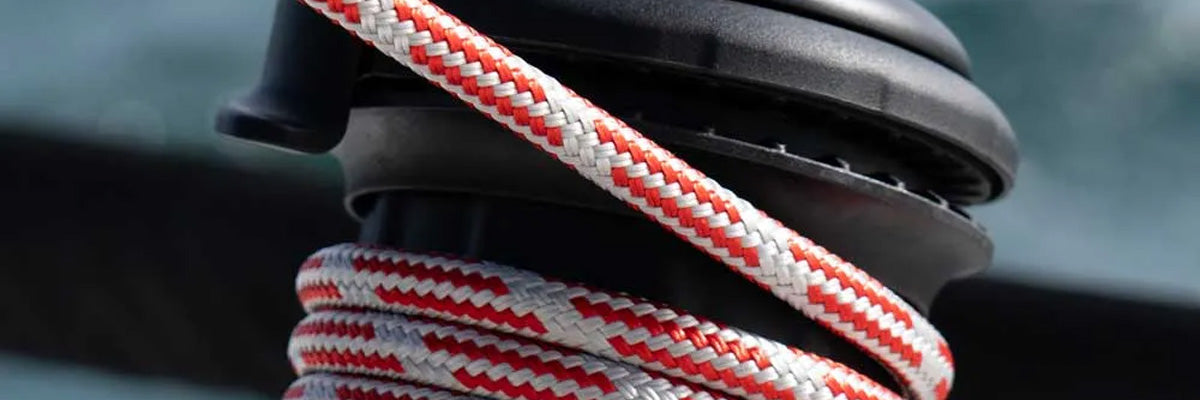
Self-tailing winches are the workhorse of any well-equipped sailboat — they let you trim, grind, and cleat a line solo, without a dedicated tailer. This guide covers everything you need to choose the right model: size ratings, speed options, materials, top brands, and maintenance.
By MAURIPRO Rigging Specialists · Updated March 2026
The Complete Guide to Self-Tailing Winches
A self-tailing winch is one of the single most impactful upgrades a sailor can make to their boat. Whether you're singlehanding a coastal cruise or crewing a grand prix racer, the ability to grind, trim, and cleat a line with one pair of hands — without a dedicated tailer — changes everything about how you sail. Understanding what separates a good self-tailing winch from a great one means understanding gearing, materials, load ratings, and the subtle engineering that makes a winch feel effortless at 30 knots of breeze.
How Self-Tailing Winches Work
A self-tailing winch uses a spring-loaded stripper arm and a grooved self-tailing jaw at the top of the drum to grip and hold the line automatically as it's winched in. The line feeds into the jaws, the drum rotates under power, and the tail feeds itself away — no second hand required. This mechanism works across a wide range of line diameters, though each winch has a recommended rope size range that should be matched carefully to your sheets and halyards.
The internal gearing is where manufacturers differentiate themselves. A single-speed winch offers one gear ratio for straightforward applications. Two-speed winches provide a fast retrieval gear for light loads and a slower, more powerful gear for heavy loads — switched by reversing the winch handle direction. Three-speed winches add a third gear for maximum mechanical advantage when grinding hard against a loaded sail in heavy air.
Choosing the Right Size: Load Ratings Explained
Winch size is expressed as a working load rating, typically in kilograms or pounds, and as a gear ratio. The larger the number, the more powerful the winch. As a general rule:
- Small boats (under 30 ft): Size 16–24 winches are appropriate for sheets and halyards.
- Mid-size cruisers (30–45 ft): Size 40–55 winches for primary sheets, size 25–40 for secondaries and halyards.
- Offshore and performance boats (45 ft+): Size 55–80+ primary sheet winches, with electric assistance often worth considering.
Always size up if you're between ratings. An undersized winch will be overworked, heat up faster, and wear significantly sooner. The cost difference between one size class is far less than a premature rebuild.
Materials: Aluminum vs. Stainless Steel vs. Carbon
The drum material has a direct impact on weight, corrosion resistance, and long-term durability:
- Anodized aluminum: The standard for most performance and cruising winches. Lightweight, strong, and corrosion-resistant when properly maintained. Used by Harken, Lewmar, and Andersen across their core ranges.
- Stainless steel: Heavier but extremely durable. Common on older winches and some commercial applications. Requires more polishing maintenance but rarely corrodes.
- Carbon fiber: Found on high-end racing winches (Antal, some Harken One-Touch models). Dramatically reduces weight aloft and on deck, which matters on performance boats. Significantly more expensive.
Top Brands at MAURIPRO
Harken
Harken's self-tailing winch lineup spans from the compact Performa to the high-load Radial range. Harken's Radial winches use a unique bottom-entry design where line feeds in at the base rather than the top, reducing friction and increasing efficiency — especially noticeable when grinding hard at high loads. Their OneTouch self-tailing jaw releases the line with a single touch, a feature that becomes essential at night or in gloves.
Lewmar
Lewmar's EVO and Ocean series are among the most widely installed winches on production cruising boats worldwide. The EVO series offers excellent value with reliable two-speed gearing and easy serviceability. Lewmar's HTX design uses a horizontal turning axis that optimizes load angles for cruising sailors who handle halyards and sheets from the same position. Spares availability for Lewmar is exceptional — virtually every part of every winch can be ordered individually.
Andersen
Danish-built Andersen winches are a favourite among serious offshore sailors and circumnavigators for one reason above all: they can be disassembled, cleaned, and reassembled in under 20 minutes with basic tools. The self-tailing arm on Andersen winches is particularly well-engineered, gripping a wider range of rope diameters than most competitors. If you're planning extended bluewater passages where you may be your own rigger, Andersen is worth the premium.
Antal
Antal's XT series winches use a unique roller bearing design rather than plain bearings, which dramatically reduces friction and the effort required to grind under load. The result is a winch that feels noticeably lighter to turn at high loads — a real advantage on race boats where every ounce of effort matters. Antal winches are built in Italy and are increasingly common on Mediterranean racing circuits.
Racing vs. Cruising: Different Priorities
Racing sailors prioritize speed, weight, and gear ratios optimized for quick sail changes. A racing crew may prefer a faster-spinning, lower-geared winch that can sheet in a spinnaker or jib quickly, accepting that grinding will require more physical effort. Weight aloft is also a consideration — lighter winches improve stability.
Cruising sailors prioritize reliability, ease of use, and low maintenance. Self-tailing jaws that work reliably with a range of rope constructions, simple internal designs that can be serviced at anchor, and corrosion resistance in tropical climates all matter more than saving 200 grams per winch. Two-speed gearing is usually sufficient; three-speed is a luxury that becomes valuable only on boats over 45 feet in heavy conditions.
Electric Self-Tailing Winches
Electric winches deserve special mention in any guide to self-tailing systems. Converting an existing manual self-tailing winch to electric — or purchasing a purpose-built electric model — gives shorthanded cruisers mechanical advantages that simply can't be matched by physical strength. Lewmar's EVO electric series and Harken's electric conversion kits are both popular options that integrate cleanly with 12V or 24V electrical systems.
The self-tailing jaw on an electric winch still performs the same function as on a manual unit — it's the power source that changes, not the mechanism. This means a high-quality electric winch still benefits from all the same jaw, drum, and bearing engineering as its manual counterpart.
Maintenance: Keeping Your Winches Running Smoothly
All self-tailing winches require periodic servicing — typically once per season for frequently used primary sheet winches, or every two years for lightly used halyard winches. The process involves:
- Removing the top cap and self-tailing arm
- Lifting out the drum to expose the internal spindle, pawls, and springs
- Cleaning all components with fresh water and a soft brush
- Inspecting pawls and springs for wear — these are the most common failure point
- Re-greasing bearings with a marine-grade winch grease
- Re-oiling pawls with a light, non-clogging pawl oil
- Reassembling and testing under load
Never use WD-40 or general-purpose lubricants inside a winch — they wash out quickly in saltwater environments and can cause pawls to stick, leading to winch reversal under load.
Installation Tips
Self-tailing winches are typically through-bolted to the cockpit coaming or cabin top with backing plates sized to distribute load across the deck substrate. The positioning angle matters: the self-tailing jaw should be angled so the exiting line tail feeds cleanly away without wrapping back around the drum. Most manufacturers include installation templates and specify the ideal lead angle in their documentation.
When replacing old winches, check the bolt pattern carefully — Harken, Lewmar, and Andersen all use different footprints, and adaptor plates are often required when switching brands.