
By MAURIPRO Sailing Specialists · Updated July 2026
The parts of a sailboat include three main systems: the hull and deck hardware, the standing and running rigging, and the sails themselves. Together, these components work as an integrated mechanical system that converts wind energy into forward motion. Whether you sail a 14-foot Sunfish or a 45-foot offshore cruiser, the same fundamental components appear across every sail boat — they simply scale in size, material, and complexity.
Understanding each part of a sailing boat is the fastest way to accelerate your learning on the water. When you can name a cleat, identify a halyard, and explain the difference between a mainsail and a jib, every sailing instruction becomes immediately actionable. This guide breaks down the essential parts sailing boat owners and beginners need to know — from the keel below the waterline to the masthead fly at the top of the rig — with precise terminology and technical context throughout.
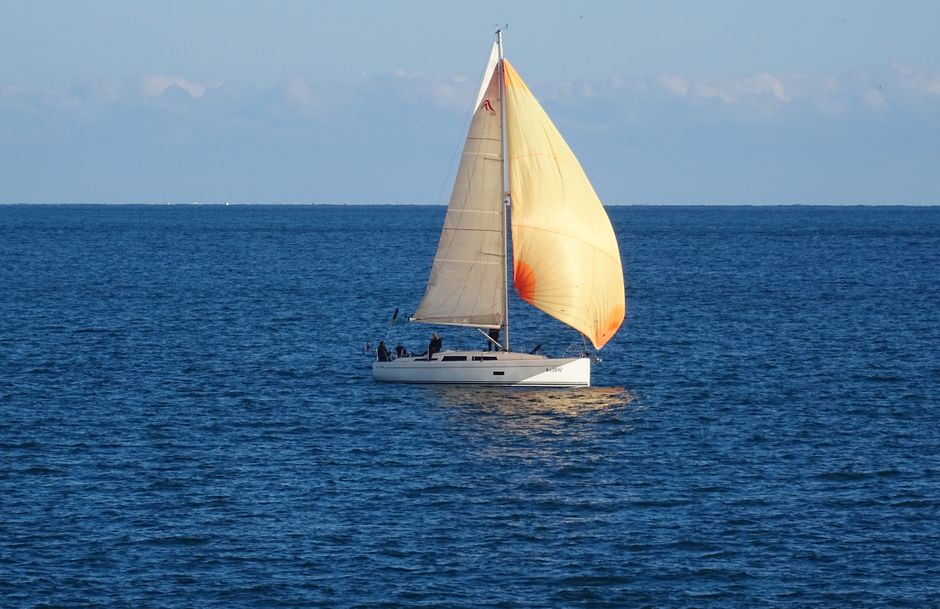
What Are the Main Parts of a Sailboat?
A sailboat is divided into three primary structural zones: the hull (the watertight body of the boat), the spars and rigging (the structural support system for the sails), and the sails themselves. Each zone contains multiple components that interact directly with the others. The bow is the forward-most point of the hull; the stern is the rear. The beam is the widest measurement across the hull, and the draft is the depth from the waterline to the lowest point of the keel — typically between 3 and 7 feet on a 30-foot cruiser.
The deck sits on top of the hull and supports the cockpit (where the crew steers and trims sails), the mast, and all deck hardware including cleats, winches, and blocks. Below decks, the keel provides ballast and lateral resistance — without it, a sailboat would simply slide sideways through the water instead of moving forward. On a Sunfish or dinghy, this lateral resistance comes from a removable centerboard or daggerboard instead of a fixed keel.
The main parts of a sailboat are the hull, keel, mast, boom, sails, standing rigging, running rigging, rudder, and cockpit — each serving a specific mechanical role in generating and controlling forward motion.
Parts of a Sailboat: Spars and Standing Rigging Explained
The Mast, Boom, and Sprit
The mast is the vertical spar that supports the sails. On a Bermuda-rigged sloop — the most common modern sailboat configuration — a single aluminum or carbon fiber mast rises from the deck or keel step. Mast height varies significantly: a Catalina 22 carries a mast approximately 26.5 feet above the deck, while a performance 40-foot cruiser-racer may have a mast exceeding 55 feet. The boom is the horizontal spar attached to the mast at a fitting called the gooseneck, and it controls the foot (the bottom edge) of the mainsail. Boom length on a typical 30-foot sloop runs between 10 and 13 feet.
On smaller boats like the Sunfish, a sprit replaces the boom — a diagonal spar that stretches the sail's upper corner (the peak) away from the mast. This lateen rig design requires no halyard; the sail is attached directly to the spars and raised as a unit. Knowing this distinction matters practically: how to sail a Sunfish sailboat involves rigging the sprit correctly before launching, a step that confuses many first-time sailors.
Standing Rigging: Stays and Shrouds
Standing rigging refers to the fixed wire or rod components that support the mast and do not move during normal sailing. The forestay runs from the masthead forward to the bow and is where the jib or genoa attaches. The backstay runs from the masthead aft to the stern, countering the forward pull of the forestay. Shrouds — port and starboard wire stays — provide lateral support. Most production sailboats use 1×19 stainless steel wire for standing rigging, with diameter sized to the boat's displacement and rig loads.
Standing rigging holds the mast upright using a system of forestay, backstay, and shrouds made from stainless steel wire or rod, sized specifically to the rig loads of each boat.
Sails Explained: Mainsails, Jibs, and Downwind Sails
The Mainsail
Mainsails are the primary sail on most rigs, attached along their leading edge (the luff) to the mast and along their bottom edge (the foot) to the boom. The three corners of any sail have specific names: the tack (lower front), the clew (lower rear), and the head (top). Horizontal battens — typically fiberglass or carbon rods — insert into pockets across the sail's trailing edge (the leech) to support its shape and prevent flutter. Full-batten mainsails, common on cruising boats, run battens from luff to leech across the full width of the sail.
Mainsail area is measured in square feet or square meters. A Catalina 27 carries a mainsail of approximately 163 square feet (15.1 m²). A performance 40-footer might carry 450 square feet (41.8 m²) of mainsail area. Sail cloth weight — measured in ounces per sailmaker's yard — typically ranges from 6 oz for a light air racing sail to 9–10 oz for an offshore cruising mainsail built for durability.
Headsails and Downwind Sails
A jib is the forward sail that attaches to the forestay. When the jib's area extends aft past the mast, it is called a genoa, rated by its overlap percentage — a 150% genoa overlaps the mast by 50% of the boat's J measurement (the horizontal distance from the mast to the forestay at deck level). Spinnakers and gennakers are large, lightweight downwind sails made from nylon or polyester ripstop, designed to maximize sail area when sailing with the wind. A symmetrical spinnaker requires a spinnaker pole extending from the mast; an asymmetrical spinnaker or gennaker sets from a bowsprit or the bow fitting.
Sailboats carry a mainsail on the boom, a jib or genoa on the forestay, and optional downwind sails — each cut to a specific shape, area, and cloth weight for its role in the wind range and point of sail.
Running Rigging: How Sailors Control the Sails
Running rigging includes all the lines (ropes, in sailing terminology) that move when you adjust or raise and lower sails. The halyard raises the sail; the sheet controls the sail's angle to the wind. The mainsheet runs from the boom to a block-and-tackle system in the cockpit, giving the helmsman mechanical advantage to trim the mainsail under load. A 4:1 or 6:1 mainsheet purchase ratio is standard on boats up to 35 feet; larger boats often use 8:1 or more.
Additional control lines include the outhaul (tensioning the foot of the mainsail along the boom), the cunningham (adjusting luff tension on the mainsail), the boom vang or kicker (preventing the boom from rising when sailing off the wind), and the traveler (a track system that adjusts the boom's athwartships position). Each of these controls affects sail shape — and therefore boat speed and pointing ability. MAURIPRO carries a full range of running rigging components, blocks, and control hardware from leading brands to help sailors tune their rig precisely.
Running rigging — halyards, sheets, outhaul, cunningham, vang, and traveler — gives sailors precise mechanical control over sail shape, angle, and position for every point of sail.
How Do Sailboats Sail Into the Wind?
Sailboats cannot sail directly into the wind — the no-go zone extends approximately 40–45 degrees either side of the wind direction. But they can sail at angles as close as 30–35 degrees to the true wind on a high-performance racing boat. The mechanism is aerodynamic lift, not drag. When a sail is trimmed correctly on a close-hauled course, the curved sail shape generates a low-pressure zone on the leeward side and a high-pressure zone on the windward side — exactly as an aircraft wing generates lift. The keel and hull shape convert this lateral aerodynamic force into forward motion by resisting sideways movement through the water.
To sail into the wind — or more precisely, to make upwind progress — sailors use a technique called tacking: sailing on a series of angled courses that zigzag toward the upwind destination. Each tack brings the bow through the wind, switching from one side (starboard tack, wind from the right) to the other (port tack, wind from the left). Understanding this is foundational to learning how to sail a sailboat, because upwind sailing requires coordinating the helm, the mainsheet, and the jib sheets simultaneously through each tack.
Sailboats sail against the wind using aerodynamic lift generated by properly trimmed sails, with the keel resisting sideways force and converting it into forward drive — making upwind progress possible through a series of angled tacks.
Frequently Asked Questions
How do sailboats sail into the wind?
Sailboats sail into the wind using a technique called tacking, where the sails are trimmed to generate aerodynamic lift rather than simply catching wind. The sail acts like a wing — when angled correctly, airflow across the curved surface creates a pressure difference that drives the boat forward. No sailboat can point directly into the wind, but most can sail at angles of 30–45 degrees off it. MAURIPRO carries the halyards, sheets, and blocks needed to optimize your sail trim for upwind performance.
What is the difference between standing rigging and running rigging on a sailboat?
Standing rigging refers to the fixed wires and rods — such as shrouds, forestays, and backstays — that support the mast and are made from stainless steel wire or rod typically ranging from 1x19 to 7x7 construction. Running rigging includes all movable lines like halyards, sheets, and control lines used to raise, lower, and trim the sails. MAURIPRO offers a full selection of both, including high-performance Dyneema and polyester running rigging in a range of diameters and constructions.
What are the main types of sails found on a modern sailboat?
Modern sailboats typically carry a mainsail, a headsail (such as a jib or genoa), and optionally a downwind sail like a spinnaker or gennaker. The mainsail attaches to the mast and boom, while headsails are measured by their overlap percentage relative to the foretriangle — a 150% genoa being a common cruising choice. MAURIPRO stocks sails and sail hardware compatible with most sloop, cutter, and ketch rigs, supporting a wide range of sailboat configurations.
What sailboat hardware does MAURIPRO carry for controlling boom and sail position?
MAURIPRO carries boom vangs, traveler systems, outhauls, and mainsheet blocks from leading brands including Harken, Ronstan, and Garhauer for controlling boom position and sail shape. A boom vang prevents the boom from rising on downwind points of sail, while a traveler allows precise mainsail angle adjustment without changing sheet tension. These components are available in sizes suited to dinghies through offshore cruising yachts, with load ratings clearly specified for safe selection.
How do I choose the right halyard for raising sails on my sailboat?
Selecting the correct halyard depends on mast height, sail weight, and desired stretch characteristics — low-stretch Dyneema or Dyneema-core halyards are preferred for performance applications, while polyester doubles braid suits most cruising boats. Diameter typically ranges from 6mm to 14mm depending on the boat's size and winch compatibility. MAURIPRO offers halyards in pre-cut lengths and custom spools, with technical specifications including break strength and elongation percentages to help sailors match the right line to their rig.
Questions? We're Here to Help
Have questions? Chat with us! Our MAURIPRO rigging and sailing specialists are available to help you find the right solution for your boat and sailing style.


