



Ronstan Track Sectional, Mechanical & Curved Track Data

Section properties of Ronstan beam tracks (moments of inertia, centroid, cross-sectional area, alloy yield values) and the minimum bend radius for each traveller car length, to size a spanning traveller or order a curved track.
Download PDF ▾

Beam Track Sectional & Mechanical Data
- Beam tracks span cockpits, companionways and unsupported deck sections where fastening options are restricted, or to avoid building extra support structure into the boat. Have the designer or builder choose the section for the application.
- Beam tracks for ball bearing cars are supplied without holes; custom hole arrangements can be drilled on request.
| Section | Ix | Iy | y (centroid) | CSA |
|---|---|---|---|---|
| RC6190 | 14294mm4 (0.0343in4) | 4219mm4 (0.0101in4) | 12.56mm (0.4945") | 196mm² (0.3038in²) |
| RC6320 | 59000mm4 (0.1417in4) | 30360mm4 (0.0729in4) | 16.96mm (0.6677") | 471mm² (0.7301in²) |
| RC1225B-2.0 | 133881mm4 (0.3217in4) | 98716mm4 (0.2372in4) | 20.2mm (0.7957") | 836 mm² (1.2969in²) |
| RC1225-3.0 | 664730mm4 (1.5970in4) | 184248mm4 (0.4427in4) | 42.3mm (1.6654") | 768mm² (1.1904in²) |
| RC1305B-3.0 | 338641mm4 (0.8136in4) | 202808mm4 (0.4872in4) | 26.9mm (1.0591") | 1051mm² (1.6291in²) |
| RC1425-3.0 | 797749mm4 (1.9166in4) | 558530mm4 (1.3419in4) | 34.7mm (1.3611") | 1687mm² (2.6149in²) |
| Material | Applies to | Values printed as σ yield |
|---|---|---|
| Aluminium alloy AL6005-T6 | All tracks unless otherwise stated | 225 MPa (32.6 ksi); 270 MPa (39.2 ksi) |
| Aluminium alloy AL6063-T6 | RC1225-3.0 | 170 MPa (24.7 ksi); 215 MPa (31.2 ksi) |
| Aluminium alloy AL6061-T6 | RC6190, RC6320 | 240 MPa (34.1 ksi); 290 MPa (42.1 ksi) |
Two values are printed for each alloy, both labelled σ yield (as printed). Section drawings with overall dimensions below.

Minimum Bend Radius by Car Length
| Traveller series | Car length mm | Min. horizontal A-bend radius mm | Min. horizontal B-bend radius mm | Car length in | A-bend radius in | B-bend radius in |
|---|---|---|---|---|---|---|
| Series 14 | 47 | 1300 | 800 | 1 27/32 | 51 7/32 | 31 17/32 |
| 50 | 1400 | 970 | 1 31/32 | 55 1/8 | 38 7/32 | |
| 68 | 2000 | 2000 | 2 11/16 | 78 13/16 | 78 13/16 | |
| 78 | 3500 | 4500 | 3 1/16 | 137 29/32 | 177 5/16 | |
| Series 19 | 50 | 1500 | 1500 | 1 31/32 | 60 | 27 29/32 (as printed) |
| 70 | 2500 | 3000 | 2 3/4 | 98 1/2 | 118 3/16 | |
| 85 | 3500 | 4500 | 3 11/32 | 137 29/32 | 177 5/16 | |
| 100 | 5000 | 5500 | 3 15/16 | 197 | 216 11/16 | |
| Series 22 | 75 | 1500 | 2000 | 2 31/32 | 59 3/32 | 78 13/16 |
| 125 | 5000 | 5000 | 4 15/16 | 197 | 197 | |
| 175 | 9000 | 13000 | 6 29/32 | 354 19/32 | 512 3/16 | |
| 180 | 9000 | 13000 | 7 3/32 | 354 19/32 | 512 3/16 | |
| Series 26 | 108 | 2500 | 2500 | 4 1/8 | 98 13/32 | 98 13/32 |
| 120 | 4000 | 4000 | 4 23/32 | 157 19/32 | 157 19/32 | |
| 200 | 8000 | 8000 | 7 7/8 | 315 3/16 | 315 3/16 | |
| 205 | 9000 | 9000 | 2 1/16 (as printed) | 354 19/32 | 354 19/32 | |
| 210 | 9400 | 9400 | 8 1/4 | 370 3/32 | 370 3/32 | |
| Series 30 | 100 | 2500 | 2500 | 3 15/16 | 98 1/2 | 98 1/2 |
| 108 | 2875 | 2875 | 4 1/4 | 113 3/16 | 113 3/16 | |
| 120 | 4900 | 4900 | 4 23/32 | 192 1/32 | 192 1/32 | |
| 150 | 8000 | 8000 | 5 29/32 | 315 3/16 | 315 3/16 | |
| 210 | 12400 | 12400 | 8 1/4 | 488 3/16 | 488 3/16 | |
| 225 | 16000 | 16000 | 8 7/8 | 630 13/32 | 630 13/32 | |
| 332 | 22500 | 22500 | 13 1/16 | 885 13/16 | 885 13/16 | |
| I-Track 19 | 51 | 400 | 400 * | 2 | 15 3/4 | 15 3/4 |
| 86 | 1200 | Not suitable | 3 3/8 | 47 1/4 | Not suitable | |
| I-Track 32 | 76 | 500 | 500 * | 3 | 19 11/16 | 20 (as printed) |
| 157 | 500 | Not suitable | 6 3/16 | 19 11/16 | Not suitable |
Ball bearing traveller Series 14 to 30 and I-Track. * B-bends for I-Track 19 and 32 have length and radius limitations: ask with your requirements. Ronstan gives minimum bend radii for Series 42 and 55 traveller cars on request.
A-Bend and B-Bend
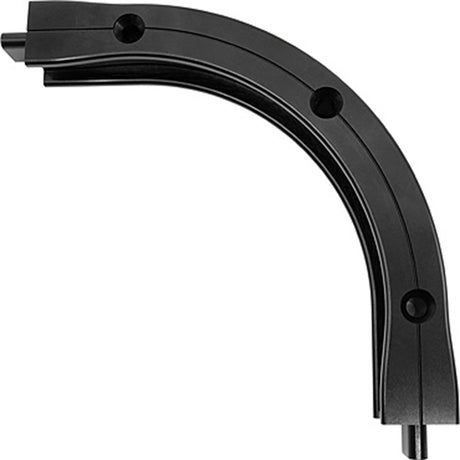
- 'A' bend (horizontal, plan view): for cars and fittings that rotate around a central pivot, so the load on the car stays vertical; keeps full strength, free rolling and constant purchase tension (mainsheet and boom vang travellers).
- 'B' bend (vertical, concave or convex, top mounted or underhung): to match deck camber, or to keep constant tension in a purchase on the car, popular on mainsheet and self-tacking jib systems.
- In a ball bearing system a bend can reduce the load capacity by loading the balls unevenly along the car. Not all track types take both bends and some cannot be curved at all.
- The minimum radius is the tightest curve the car will run around freely. Light bends can be "sprung in" during installation, taking great care to keep the curve even, with no tight spots and no permanent deformation; for best results order the track pre-bent.
Ordering a Curved Track
- Specify the track profile by product no.
- Indicate the bend: 'A' (horizontal) or 'B' (vertical), concave or convex.
- Give two critical dimensions (three if possible) and clear drawings where possible: radius R and offset O, or R and track length L, or R and chord length C, or offset O and chord length C.
- Where R is not known it is easiest to specify C and O; the radius the track follows MUST then be constant.
Need a part that isn't listed? Ask us to source it and quote the part number from the PDF.
Products in this Selection Guide
-


RONRC6320R515A
$203.00 USDList Price: $241.05 USDUnit price /Unavailable -
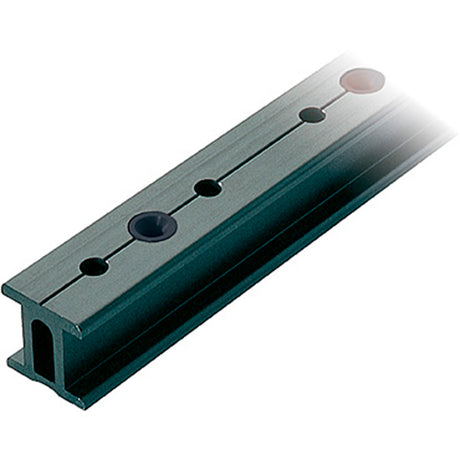
Ronstan Track Series 32 I-Beam Track 'A' Bend (Black) - Aluminum alloy - Length: 3.9 ft (1195.4 mm)
RONRC6320R500A
$192.00 USDList Price: $227.34 USDUnit price /Unavailable -
Ronstan Track Series 32 I-Beam Track 'A' Bend (Black) - Aluminum alloy - Length: 0.9 ft (293.0 mm)
RONRC6320R125A
$511.00 USDList Price: $628.26 USDUnit price /Unavailable -
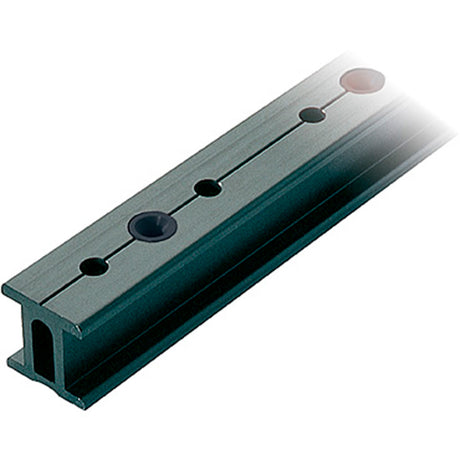
Ronstan Track Series 32 I-Beam (Black) - Aluminum alloy - Length: 9.8 ft (2996.0 mm)
RONRC632030
$365.00 USDList Price: $432.28 USDUnit price /Unavailable -
Ronstan Track Series 32 I-Beam (Black) - Aluminum alloy - Length: 6.5 ft (1996.0 mm)
RONRC632020
$259.00 USDList Price: $306.22 USDUnit price /Unavailable -
Ronstan Track Series 32 I-Beam (Black) - Aluminum alloy - Length: 4.9 ft (1496.0 mm)
RONRC632015
$185.00 USDList Price: $219.26 USDUnit price /Unavailable -
Ronstan Track Series 32 I-Beam (Black) - Aluminum alloy - Length: 3.3 ft (996.0 mm)
RONRC632010
$144.00 USDUnit price /Unavailable -
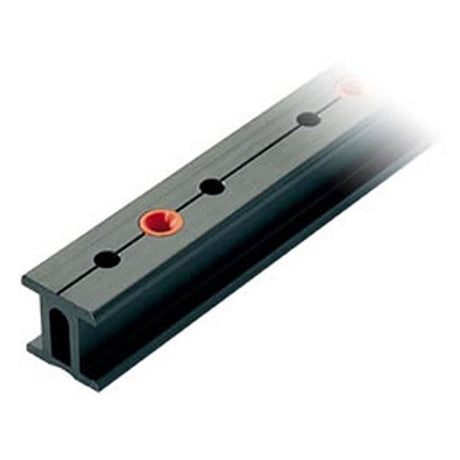
Ronstan Track Series 22 Beam Undrilled Traveller (Black) - Alloy - Length: 6.6 ft (2000.0 mm)
RONRC1225B-20
$368.00 USDList Price: $435.68 USDUnit price /Unavailable -
Ronstan Track Series 22 Beam Undrilled Traveller (Black) - Alloy - Length: 9.8 ft (2996.0 mm)
RONRC122530
$368.00 USDList Price: $435.68 USDUnit price /Unavailable -
Ronstan Track Series 42 Beam Undrilled Traveller (Black) - Alloy - Length: 9.8 ft (2996.0 mm)
RON-RC1425-30
$683.00 USDList Price: $838.88 USDUnit price /Unavailable